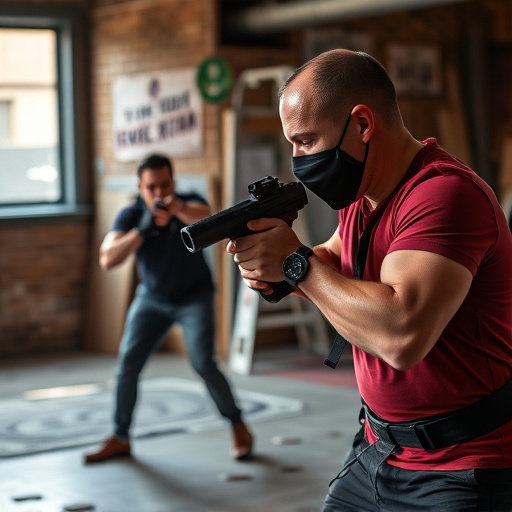
Stun guns are more effective against large attackers due to their high voltage shocks that disrupt muscle control swiftly. Pepper spray may still disorient larger assailants but is less potent. Tasers offer a longer range than stun guns, making them advantageous for distant encounters and larger opponents, emphasizing power and range in self-defense tools.
In today’s world, personal safety is a top priority. Handheld electrical self-defense weapons like stun guns and tasers offer individuals an extra layer of protection against potential threats. This comprehensive guide delves into the comparison of these devices, focusing on their effectiveness, range, and power. Specifically, we explore which weapon excels in neutralizing larger attackers, examining the strengths and weaknesses of stun guns versus pepper spray. By analyzing real-world applications, this article aims to empower individuals to make informed decisions for their safety.
- Stun Guns vs. Pepper Spray: Which is More Effective?
- Examining Range and Power in Handheld Devices: A Comparison Study of Stun Guns and Tasers
Stun Guns vs. Pepper Spray: Which is More Effective?
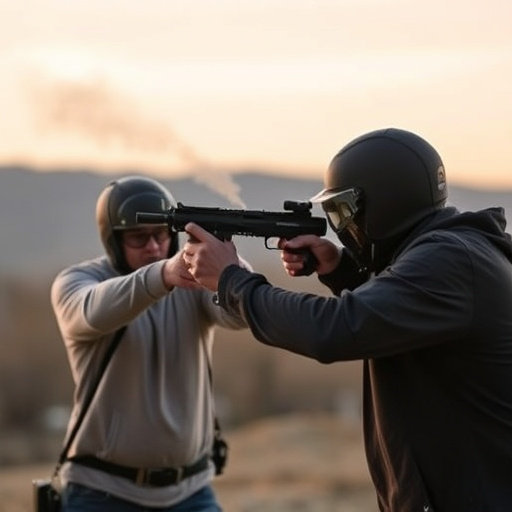
When comparing stun guns to pepper spray, understanding their effectiveness against different types of attackers is crucial. While both are powerful self-defense tools, they have distinct advantages and limitations, especially when facing larger or more aggressive assailants. Stun guns deliver an electric shock that can temporarily disable an attacker by disrupting muscle control, making them particularly effective for subduing stronger individuals. The high voltage ensures a rapid response, allowing users to escape or gain control in critical situations.
On the other hand, pepper spray attacks the respiratory system, causing severe irritation and temporary blindness. It is less likely to be counterproductive against large attackers who may have higher pain tolerances but can still be effective for temporarily disorienting them. In situations where an attacker’s size or strength poses a significant risk, stun guns offer a more direct and potentially faster solution, making them the preferred choice for self-defense in various scenarios, especially when facing larger opponents.
Examining Range and Power in Handheld Devices: A Comparison Study of Stun Guns and Tasers

When comparing handheld self-defense weapons, understanding range and power is paramount. Stun guns and Tasers are popular choices, each with distinct capabilities. In terms of stun gun effectiveness on large attackers, devices often advertise varying voltage outputs, measuring their impact potential. However, range plays an equally critical role; a longer reach allows for safer intervention in distant encounters.
Tasers, known for their ability to temporarily incapacitate through muscle contractions, generally offer a more extended range compared to stun guns. This advantage is crucial when facing larger opponents or situations demanding a distance-based defense strategy. The power and range of these devices are essential considerations for users seeking effective self-defense tools, especially in scenarios where size and strength pose significant challenges.
When comparing handheld electrical self-defense weapons, such as stun guns and tasers, understanding their effectiveness, range, and power is crucial for making an informed choice. While stun guns may offer a more significant impact on larger attackers, pepper spray remains a versatile option with shorter-range but wider coverage. Ultimately, the best choice depends on personal preference, situational needs, and local legal considerations. Staying prepared and informed can significantly enhance your ability to defend yourself in various scenarios.