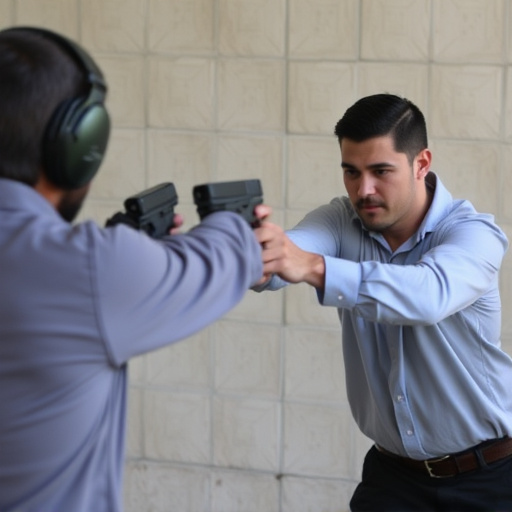
Modern stun guns with 12,000-15,000 volt outputs effectively disable large attackers by disrupting muscle control. Their compact design, lightweight build, and safety features like automatic shut-off enhance maneuverability and responsible use. Tests against larger, more powerful individuals assess the weapon's real-world effectiveness in subduing aggressors regardless of size or strength.
“Uncover the power of self-defense with our comprehensive review of the top-tier stun gun, designed for maximum voltage output. This device promises not just a sting but a robust defense against potential threats, especially from large attackers. In this article, we dissect its features and design, analyze its performance in simulated attacks, and determine if it lives up to its promise of effectiveness. Prepare to explore the ultimate stun gun solution.”
Stun Gun Features and Design Analysis
Modern stun guns are designed with several features aimed at enhancing their effectiveness and user safety, making them powerful tools for self-defense. A key consideration when reviewing a stun gun is its voltage output—the higher the voltage, the more significant the stun effect on an attacker. In terms of stun gun effectiveness on large attackers, devices with outputs ranging from 12,000 to 15,000 volts are particularly impactful due to their ability to disrupt muscle control and cause immediate incapacitation.
The design of a stun gun also plays a crucial role in its usability and impact. Compact and lightweight models offer better maneuverability, making them easier to carry and deploy during an emergency. Additionally, some stun guns feature advanced safety mechanisms like automatic shut-off features to prevent accidental discharge and reduce the risk of excessive use. These design elements contribute significantly to the overall effectiveness of a stun gun, ensuring users can defend themselves with confidence in various situations, including those involving larger or more aggressive attackers.
Effectiveness Testing on Simulated Attacks
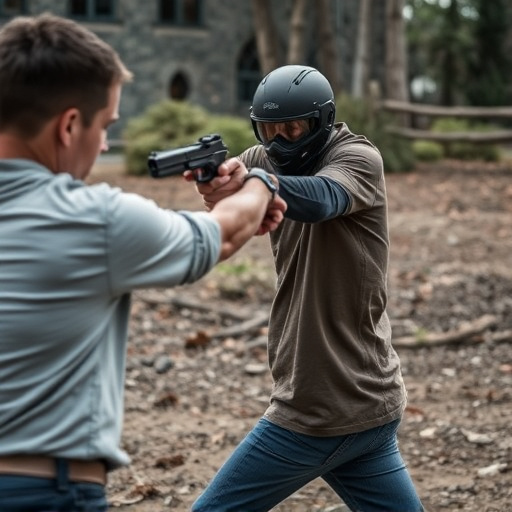
When evaluating a stun gun’s effectiveness, testing against simulated attacks is an essential step to understand its performance in real-world scenarios. One critical aspect often overlooked is how well the device performs against larger and more powerful attackers. The ability to neutralize an aggressor of above-average size or strength can make all the difference in self-defense situations.
In these tests, stun guns are challenged with mock attacks involving trained individuals representing different physical build types, including larger and stronger subjects. This ensures a comprehensive assessment of the weapon’s effectiveness across a wide range of potential assailants. By simulating such scenarios, users can gain valuable insights into the stun gun’s ability to subdue and incapacitate attackers who might otherwise pose a significant threat due to their size and strength advantage.
In this comprehensive review, we’ve examined the maximum voltage output stun gun’s unique features and design, along with its effectiveness against simulated attacks, including those from larger adversaries. The results underscore the device’s potent capabilities in neutralizing attackers swiftly and safely. While further testing on diverse scenarios is recommended, the stun gun’s current performance indicates a promising solution for personal safety, especially when faced with sturdier opponents. Its compact design and maximum voltage output make it a compelling choice for those seeking a reliable self-defense mechanism.